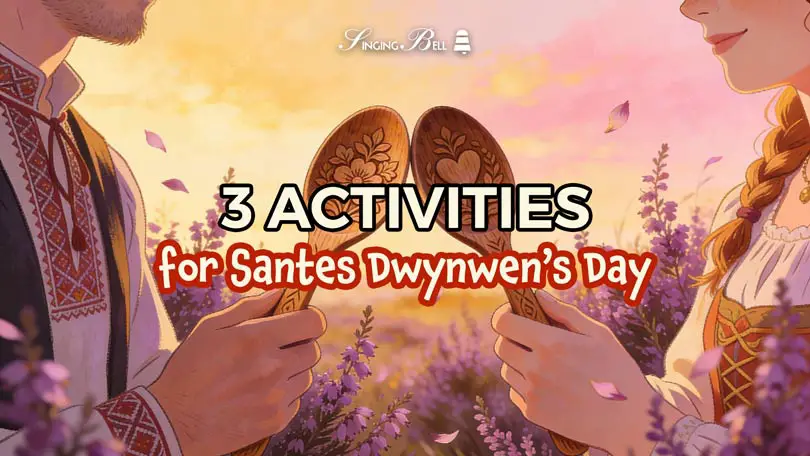
Discover three fun, meaningful activities to help children celebrate Santes Dwynwen’s Day at school or at home.

Celebrated on January 25th, Santes Dwynwen’s Day (the Welsh celebration of love, kindness, and friendship) is a wonderful opportunity to bring warmth into the classroom or home. While it’s often described as the Welsh “Valentine’s Day,” it can be celebrated in a broader and more child-friendly way: appreciation, gratitude, friendship, and caring for others.
That’s why the activities below are ideal for teachers, parents, and after-school educators alike. They don’t require expensive supplies, they work with different ages, and they naturally encourage emotional literacy—without becoming overly romantic.
Table of Contents
- Welsh Love Spoon Craft (and what love spoons are)
- Kindness Cards (“Dwynwen Wishes”) + mini Welsh words
- Love & Friendship Poetry (inspired by classic poems)
Welsh Love Spoon Craft (and what love spoons are)
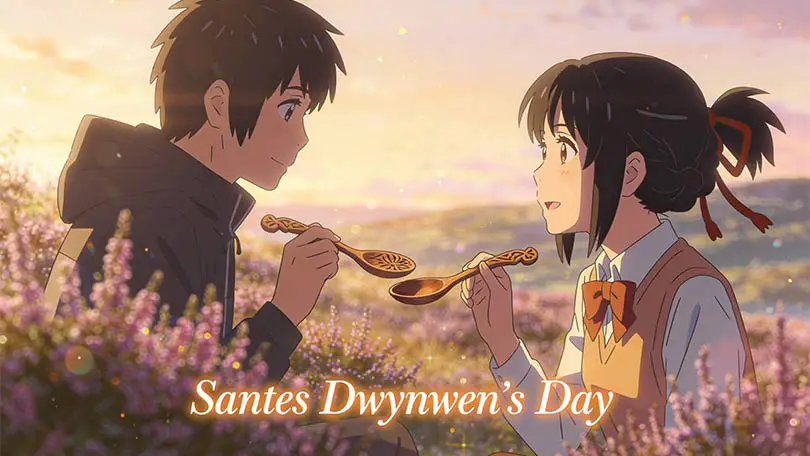
What are Welsh love spoons?
Welsh love spoons are traditional decorative wooden spoons, often hand-carved, that were historically given as a gift to show affection and commitment. They’re not meant for cooking—they’re symbolic keepsakes.
What makes them especially interesting for children is the way they use symbols, like:
- hearts for love
- keys for safety or “you have the key to my heart”
- knots for togetherness
- chains for strong bonds
- wheels for support and shared journey
So even very young children can design their own “message spoon,” choosing shapes that match what they want to express.
Classroom activity idea (easy + age flexible)
Materials: thick paper/cardstock, crayons/markers, scissors, glue, optional yarn or ribbon
Steps:
- Show children a basic spoon shape and explain it’s a Welsh tradition for giving a kind message.
- Let them design their spoon using symbols:
- heart = love
- star = “you shine”
- key = trust
- flower = care
- Cut out and decorate.
- Optional: glue the spoon onto another sheet and write a message underneath:
- “You are a great friend because…”
- “Thank you for…”
✅ Tip: If you want, you can turn this into a classroom display called “Our Friendship Spoons.”
Kindness Cards (“Dwynwen Wishes”) + mini Welsh words
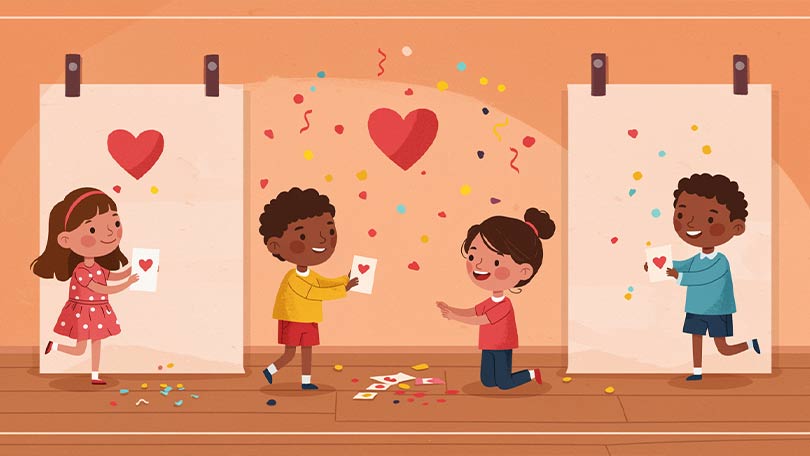
This is a beautiful way to celebrate Santes Dwynwen’s Day as a kindness holiday, not just a love holiday.
Activity
Students create kindness cards for:
- classmates
- teachers
- family members
- someone who needs encouragement
Simple prompts:
- “I appreciate you because…”
- “You make our class better by…”
- “Thank you for helping me when…”
Incorporate Welsh words (simple + fun)
To bring Wales into the celebration, add one Welsh word to each card as a mini language activity.
Examples:
- Cariad = love
- Diolch = thank you
- Ffrind = friend
You can put them on the board and let children “choose one” for their card.
✅ Teacher idea: make a “Welsh Word Bank” corner and keep it up all week.
Love & Friendship Poetry (inspired by classic poems)
Poetry is perfect for this day because it gives children a safe way to talk about feelings: friendship, calm, appreciation, and imagination.
For this activity, you can use the mood and ideas from two classic poems:
More ideas: 12 Fun and Easy Poems to Spark Kids’ Love for Poetry
Poem inspiration #1
“The Swing” (Robert Louis Stevenson)
This poem celebrates the joy of swinging high and seeing the world from above.
Theme to borrow: happiness, freedom, the feeling of being light and safe.
The Swing
How do you like to go up in a swing,
Up in the air so blue?
Oh, I do think it the pleasantest thing
Ever a child can do!
Up in the air and over the wall,
Till I can see so wide,
River and trees and flowers and fields,
And all at my lovely ride!
How do you like to go up in a swing,
Up in the air so blue?
Oh, I do think it the pleasantest thing
Ever a child can do!
Robert Louis Stevenson
Listen to this poem
Poem inspiration #2
“The Owl and the Pussy-Cat” (Edward Lear)
A playful, musical poem about an unusual pair on an adventure.
Theme to borrow: friendship, togetherness, imagination, silly fun.
Adapted 21st century version
The Owl and the Pussycat
The Owl and the Pussy-Cat went to sea
In a beautiful pea-green boat,
They took some honey, and plenty of money,
Wrapped up in a five-pound note.
The Owl looked up to the moon above,
And sang to a small guitar,
‘O lovely Cat! O Cat, my love,
What a beautiful Cat you are,
You are,
You are,
What a beautiful Cat you are!’
The Cat said to the Owl, ‘You elegant fowl!
How charmingly sweet you sing!
Oh, let us be married! too long we have tarried,
But what shall we do for a ring?’
They sailed away, for a year and a day,
To the land where the Bong-tree grows,
And there in a wood, a piggy-wig stood
With a ring at the end of his nose,
His nose,
His nose,
With a ring at the end of his nose.
‘Dear Pig, are you willing to sell for one shilling
Your ring?’ said the Owl to the pig.
‘I’ll sell it for a shilling.
Only a shilling!
The Owl and the Pussy-cat agreed.
Edward Lear
Listen to the Adapted 21st century version
Classroom activity: “Friendship Poem Builder”
Materials: paper, pencils, optional coloring tools
Part A: Read + mood discussion
Ask:
- What feeling does this poem give you? (happy, calm, funny, dreamy)
- What images can you picture?
- What words feel “kind” or “soft”?
Part B: Write a short poem
Children write a 4–6 line poem about friendship using one of these structures:
Option 1: Simple rhyme
I like my friend because they care,
They always help and always share…
Option 2: “Swing view” poem
Write as if you are on a swing:
- What do you see?
- Who do you wish was swinging next to you?
- What kind message would you shout to them?
Option 3: Silly adventure poem
Inspired by Owl and Pussy-Cat:
- pick two animals or characters
- give them a tiny journey
- end with a friendly message
✅ Extension: children can illustrate their poem and make a class poetry book:
“Our Santes Dwynwen Friendship Poems.”
Liked it? Pin it!
Did you like this post? Rate it!
 (No Ratings Yet)
 Loading...
You may also like:
Celebrating Burns Night : Facts and Activities for Kids
5 Music Activities for Kids to Use on Shakespeare’s Birthday
Celebrating National Poetry Month: 5 Tips for Engaging Students with Poetry